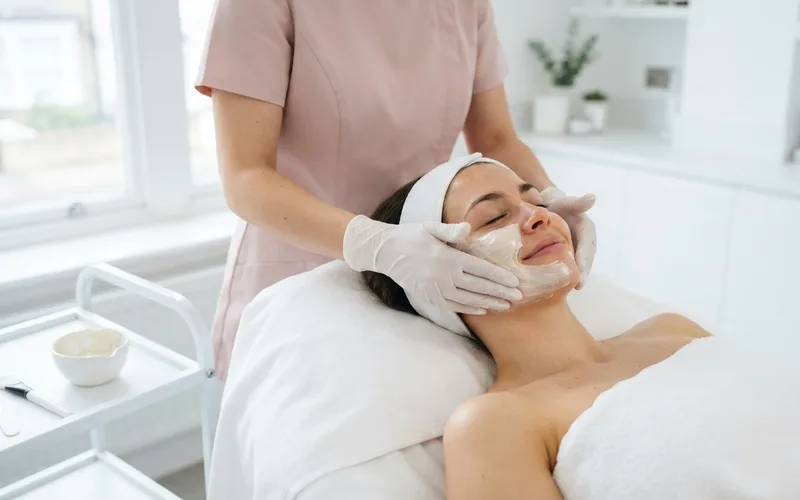
The short answer: the best facial near you is one that starts with a proper look at your skin and adapts the steps to what it finds, not one picked from a menu name. A good facial cleans out congestion, brightens and hydrates skin and gives you advice you can use at home. It will not lift sagging skin or remove scars, and a good therapist will tell you when you need something stronger.
What Are the Benefits of a Facial?
Realistic facial benefits:
- Clearer pores. Deep cleansing and careful extractions remove blackheads you cannot safely shift yourself.
- Brighter, smoother skin. Professional exfoliation removes dull surface cells.
- Better hydration. Masks and serums leave skin plumper and more comfortable for days.
- Relaxation. Facial massage boosts circulation and genuinely helps you unwind.
- Expert eyes on your skin. A trained therapist can spot dehydration, sensitivity or early pigmentation before problems build.
What a facial will not do: lift jowls, fill deep lines, remove acne scars or fade stubborn pigmentation on its own. Those need targeted treatments, covered further down.
How Much Is a Facial in the UK?
Prices vary a lot by clinic, area and length of appointment, so treat these as broad guides only. A standard salon facial typically costs somewhere around £40 to £80. Longer or more advanced clinic facials often cost more, and central London prices tend to be higher again. Prices around Luton and Bedfordshire generally sit below London.
When comparing, check what is included: a skin assessment, extractions, hands-on time and home care advice. My current facial prices are on the treatments page.
Which Facial Suits Which Skin Type
| Skin type | What helps | What to avoid |
|---|---|---|
| Dry or dehydrated | Gentle cleanse, hydrating serums, nourishing mask, massage | Stripping cleansers, strong scrubs |
| Oily or acne-prone | Deep cleanse, salicylic exfoliation, careful extractions, calming mask | Heavy oils, aggressive squeezing |
| Sensitive | Fragrance-light products, minimal exfoliation, soothing mask | Hot steam, harsh scrubs, too many actives |
| Ageing | Hydration, gentle acid exfoliation, antioxidants, lifting massage | Expecting a facial to lift sagging |
| Dull or tired | Brightening exfoliation, vitamin C, massage for circulation | Over-exfoliating at home between visits |
Combination skin, with an oily T-zone and drier cheeks, is the most common: a good facial treats the zones differently.
If you have moderate to severe acne, painful cysts or a sudden flare, please see your GP or a dermatologist. A facial can support skin alongside treatment, but it is not a substitute for it.
Best Facial for Ageing Skin
For ageing skin, I focus on hydration, gentle exfoliation to brighten, antioxidants and a lifting massage. You leave looking fresher and plumper, but a facial works on the surface. If your concern is fine lines and texture, a course of PRX-T33 or microneedling reaches deeper. If it is sagging along the jaw or neck, that is structural, and HIFU is designed for it.
Do Facials Remove Blackheads?
Yes, for a while. Blackheads are pores blocked with oil and dead skin that darkens on contact with air. Exfoliation softens them and careful extraction by a trained therapist removes them without damaging the skin. Squeezing with fingernails at home causes marks.
They do come back, because pores keep making oil. What keeps them down is a salicylic acid cleanser or toner a few times a week, a non-comedogenic moisturiser, and a facial or light peel every few weeks.
What Is a High Frequency Facial?
A high frequency facial uses a handheld glass electrode filled with an inert gas. A mild, high frequency electrical current passes through it and over the skin, with a faint buzz and a violet or orange glow. It is mainly used on oily and breakout-prone skin, where it is said to help calm spots and leave skin feeling less congested, often as one step within a longer facial. The evidence for it is modest, so think of it as a supporting step rather than an acne treatment. It is not suitable during pregnancy or if you have a pacemaker, metal implants or epilepsy. If you want it, check the treatments page or ask before booking.
Not Sure Which Facial to Book?
Message me about your skin and I will suggest the right facial, or book a free consultation in Dunstable and we can decide together.
What Happens in a Facial at My Clinic
Every facial starts with a chat about your skin, routine, medication and allergies, then a close look in good light. From there:
- Double cleanse to remove make-up and build-up.
- Exfoliation chosen for your skin type.
- Extractions, only where they will help, and always gently.
- Treatment mask matched to your goals.
- Massage of the face, neck and shoulders.
- Moisturiser and SPF, plus advice for home.
There is no downtime. More detail is on my facials in Dunstable page.
What Should I Do After a Facial?
| When | What to do |
|---|---|
| First few hours | Skip make-up if you can; let products absorb |
| Day 1 | No saunas, steam rooms, hot baths or hard workouts; do not pick extracted areas |
| Days 1 to 2 | No scrubs, acids or retinoids; gentle cleanser, moisturiser, SPF |
| Day 3 onwards | Back to your usual routine |
Slight pinkness after extractions usually settles within hours.
How Often Should You Have a Facial?
Every four to six weeks suits most people, roughly in step with the skin's renewal cycle. Congested skin may benefit from a closer course at first. If budget is tight, a facial every couple of months plus a good home routine works well.
When to Step Up From Facials
- Pigmentation or sun spots: a course of chemical peels. See my guide to dark spots on the face.
- Dullness, texture and fine lines with no downtime: PRX-T33, a needle-free treatment with little visible peeling.
- Acne scars and enlarged pores: microneedling. My acne scar treatment guide explains the options.
- Sagging jawline or neck: HIFU.
Many clients keep facials between courses of stronger treatments to keep skin healthy.
The £45 Personalised Skin Care Plan
If you have a shelf of products that do not seem to work, my £45 Personalised Skin Care Plan may be the best first step. I assess your skin, review your routine and goals, and write a clear plan for home care and any in-clinic treatments that would help.
Finding a Facial Near Me: Dunstable, Houghton Regis and Luton
Whoever you book with, ask: will they assess your skin first, what are they trained in, will they patch test if you are sensitive, and will they tell you honestly if a facial is not the right treatment? My clinic is in Dunstable, a short drive from Houghton Regis, Luton, Toddington and Leighton Buzzard, and easy to reach from St Albans, Harpenden and Hemel Hempstead.
Frequently Asked Questions
How much is a facial in the UK?
Prices vary widely by clinic, area and how long the facial lasts. As a rough guide, a standard salon facial typically costs somewhere around £40 to £80, while longer or more advanced clinic facials often cost more, and central London prices tend to be higher still. Check what is included, such as a skin assessment and extractions, rather than comparing on price alone.
What should I do after a facial?
Keep your skin simple for a day or two. Avoid make-up for a few hours if you can, skip exfoliants and retinoids for around 48 hours, use a gentle moisturiser and SPF, avoid saunas, steam rooms and hard workouts that day, and do not pick at any areas that were extracted.
Do facials remove blackheads?
A facial with careful extractions can clear existing blackheads, and exfoliation helps loosen them. They do come back, because pores keep producing oil, so a home routine with a salicylic acid product and regular facials or peels is what keeps them under control.
How often should you have a facial?
Every four to six weeks suits most people, roughly in step with the skin's natural renewal cycle. Congested skin may benefit from a closer course at first, while a facial every couple of months is fine for maintenance if your home routine is good.
What is a high frequency facial?
A high frequency facial uses a glass electrode that passes a mild, high frequency electrical current over the skin, often with a faint buzz and a violet or orange glow. It is mainly used for oily and breakout-prone skin. It is not suitable for everyone, for example during pregnancy or with a pacemaker, metal implants or epilepsy.
What is the best facial for ageing skin?
A facial focused on hydration, gentle exfoliation, antioxidants and lifting massage is the best choice for a fresher, plumper look. A facial cannot lift sagging skin or rebuild collagen deep in the skin, so for those concerns treatments such as microneedling, PRX-T33 or HIFU are more effective.