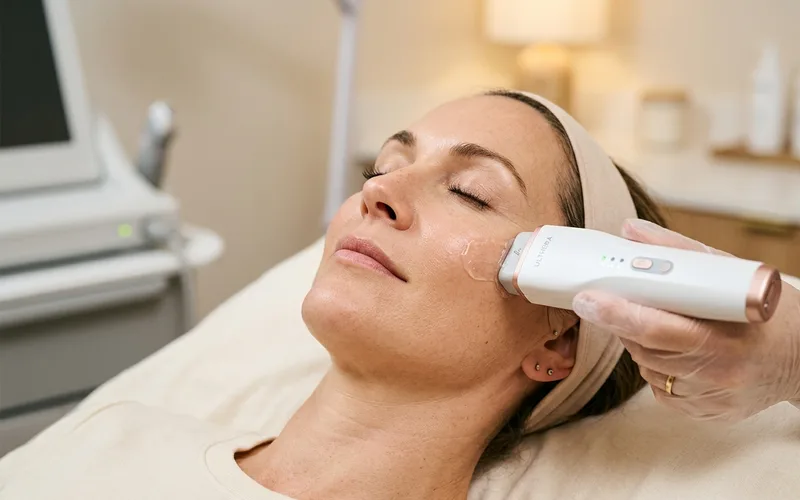
How HIFU Works: The Science in Plain English
HIFU stands for High-Intensity Focused Ultrasound. The treatment uses precisely focused ultrasound energy, delivered in micro-points, to reach the SMAS layer: the deep structural tissue of the face that sits beneath the skin and subcutaneous fat. This is the same layer that surgeons work on during a surgical facelift.
At each energy point, a controlled thermal response causes the tissue to contract and stimulates your body's natural collagen production process. New collagen fibres form and mature over the following 3 to 6 months, producing a gradual lifting, tightening and firming effect.
The key difference between HIFU and surface-level treatments such as radiofrequency or microneedling is depth. By reaching the SMAS layer, HIFU can create a structural change in the face rather than just a surface improvement.
What Areas Can HIFU Treat?
HIFU can be applied to most areas of the face and body. At Amina Beauty, the most commonly treated areas are:
- Full face: lifting the midface, improving skin texture and overall firmness
- Jawline and jowls: defining the jaw and reducing the appearance of sagging
- Under-chin and double chin: reducing submental fullness and tightening the neck
- Brow: lifting a heavy brow to open up the eye area
- Neck and decolletage: tightening loose or crepey skin
- Body: abdomen, arms, inner thighs, flanks and knees
For the full breakdown of treatments and prices, see the treatments page.
What Does the Treatment Feel Like?
The treatment involves a handheld device moved across the skin in a precise pattern. Most clients describe a mild heat or tingling sensation as the energy is delivered. The intensity varies by area; bony areas such as the jawline and around the eyes tend to be more noticeable than the cheeks or neck.
There is no anaesthetic required. Sessions typically take 30 to 90 minutes depending on the areas treated, and you can return to normal activity the same day.
What Results Can You Expect?
HIFU results are gradual and progressive. A typical timeline looks like this:
- Immediately after: mild redness and warmth, which usually resolve within a few hours. Some clients notice a slight immediate tightening.
- Weeks 2 to 8: collagen remodelling begins. Skin starts to feel firmer and look slightly more lifted.
- Months 3 to 6: peak results. Significant lifting and tightening, improved skin texture, clearer jaw definition.
- Months 12 to 18: results begin to fade gradually as natural ageing continues. This is when most clients book a maintenance session.
Is HIFU Worth It?
For the right candidate, yes. It is one of the most effective non-surgical treatments available. HIFU is particularly well-suited for:
- Adults in their 30s, 40s and 50s noticing early to moderate skin laxity
- Anyone wanting to maintain their appearance without surgery or downtime
- Clients looking to delay or reduce the need for future surgical intervention
- Anyone who has tried surface-level treatments and wants more significant results
It is less suitable for advanced or severe skin laxity, where surgical intervention may be needed to achieve the desired result. I always give honest guidance at consultation. If HIFU is not the right treatment for your skin, I will tell you that directly.
Want to Know if HIFU Is Right for You?
Book a free, no-obligation consultation at Amina Beauty in Dunstable. I will assess your skin, explain what HIFU can realistically achieve, and give you my honest recommendation.
Frequently Asked Questions
What does HIFU stand for?
HIFU stands for High-Intensity Focused Ultrasound. It uses focused ultrasound energy to stimulate collagen production in the deep structural layers of the skin, producing a lifting and tightening effect without surgery or downtime.
How many HIFU sessions do you need?
Most clients achieve their result with a single session. Results continue to develop over 3 to 6 months as collagen remodels. A top-up session after 12 to 18 months is common, but a single treatment is typically sufficient to see significant improvement.
Is HIFU suitable for all skin types?
HIFU works on most skin types and tones. Because it targets the deep structural layers rather than the skin surface, it does not carry the pigmentation risks associated with some laser treatments. A consultation confirms suitability for your specific skin.
Is HIFU painful?
Most clients describe a mild heat sensation or brief tingling. There is no anaesthetic required and no downtime after treatment. Any discomfort is brief and well-tolerated by the vast majority of clients.