The Short Answer
Most dark spots on the face are caused by sun exposure, hormones or inflammation left behind after spots. The most reliable way to fade them is daily SPF, a proven brightening ingredient used consistently, and, if needed, a course of gentle in-clinic treatment such as chemical peels or PRX-T33. Progress is measured in months rather than days, and any spot that is new or changing should be checked by a GP first.
What Causes Dark Spots on the Face?
Dark spots, or hyperpigmentation, happen when the pigment cells in your skin produce extra melanin in one area. Melanin is your skin's natural protection against ultraviolet light, so anything that irritates or stimulates those cells can lead to darker patches. The type matters, because it shapes the treatment.
Sun spots (age spots or solar lentigines). Flat, defined brown marks on the cheeks, forehead, hands and chest. They build up from years of sun exposure and often appear from the thirties onwards.
Post-inflammatory hyperpigmentation (PIH). Marks left after skin has been inflamed or injured, for example after a spot, a graze or eczema. PIH is very common after acne and tends to last longer in deeper skin tones. My guide to acne scar treatment covers marks and scars together.
Melasma. Larger, often symmetrical patches across the cheeks, upper lip, forehead or nose. It is linked to hormones and strongly triggered by sun, visible light and heat.
Freckles. Small, scattered marks that darken in summer. Many people would not want to treat them at all.
How to Get Rid of Brown Spots on Your Face
Start with SPF, every single day
I say this to every client: no cream or clinic treatment will hold its results without daily sun protection. Even a few unprotected days can undo weeks of progress.
- Wear a broad-spectrum SPF 30 or higher every day, all year, including cloudy days.
- Reapply if you are outdoors for long periods.
- If you have melasma, consider a tinted mineral sunscreen, as tints containing iron oxides offer some protection against visible light too.
Is there a dark spot cream that actually works?
Yes, but it is the ingredients that matter, not the brand or the price. Look for:
- Vitamin C: an antioxidant that helps brighten and protect.
- Niacinamide: helps even tone and is usually well tolerated.
- Azelaic acid: gentle and often suitable for sensitive or acne-prone skin.
- Retinoids: speed up skin renewal, but introduce slowly and avoid during pregnancy.
Hydroquinone is prescription-only in the UK, so it is not something you should buy online or use without a doctor. If over-the-counter products have not helped, your GP or a dermatologist can discuss prescription options.
Be gentle
Harsh scrubs, picking and too many acids cause inflammation, which makes pigment worse. Introduce one new product at a time.
How to Treat Hyperpigmentation Faster
The honest answer is that you cannot rush pigment, but you can stop slowing it down. Combining daily SPF, one well-chosen active and a course of in-clinic treatment usually gives the steadiest progress. Here is roughly what to expect:
| Timeframe | What usually happens |
|---|---|
| Weeks 1 to 4 | Skin looks brighter and smoother. Spots may look the same. |
| Weeks 4 to 8 | Lighter marks and PIH often begin to soften. |
| Months 2 to 3 | Clearer difference in sun spots and overall tone. |
| Months 3 to 12 | PIH may fade substantially. Melasma needs ongoing care to stay lighter. |
Results vary from person to person, and nobody can guarantee a mark will clear completely.
In-Clinic Options
Chemical peels for pigmentation
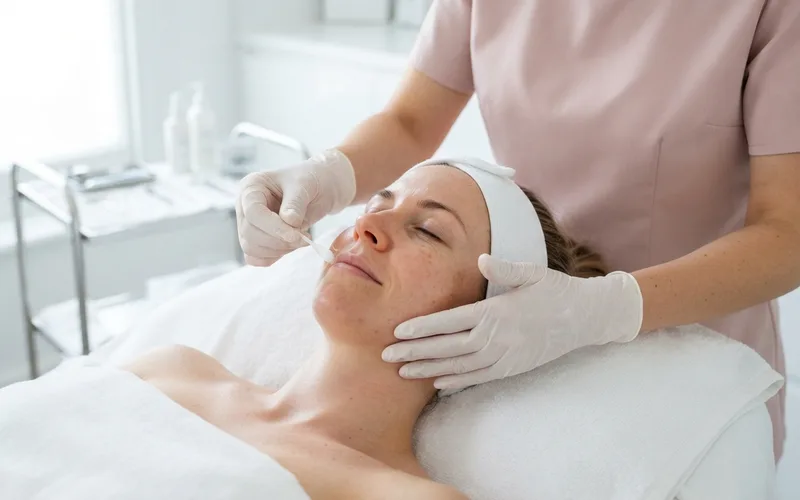
A peel speeds up the turnover of skin cells, helping pigmented cells shed more quickly. When people ask for the best chemical peel for pigmentation, my answer is usually a course of lighter peels rather than one strong one, because steady progress carries less risk of irritation and rebound. My guide to chemical peel before and after results shows what a course looks like, and you can read about my chemical peel treatments.
PRX-T33
PRX-T33 is a needle-free treatment containing TCA, hydrogen peroxide and kojic acid, which is often used for uneven tone. It causes little or no visible peeling and is usually given as a course of 3 to 5 sessions about a week apart. More detail is in PRX-T33 Explained and on my PRX-T33 treatment page.
Microneedling
Microneedling is not a first choice for pigmentation on its own, but it can help with texture and marks after acne. With melasma or a tendency to PIH I use it cautiously, if at all, because inflammation can trigger more pigment. See my microneedling treatment page.
Some sun spots respond well to laser or cryotherapy given by a doctor or dermatologist. I do not offer these, but I will tell you if I think they would suit you better.
Not Sure What Type of Dark Spots You Have?
Book a free consultation in Dunstable. I will look at your skin, talk through your history and suggest a careful, realistic plan, or tell you if it is worth seeing your GP first.
Can Melasma Be Treated?
Yes, melasma can often be improved, but it is managed rather than cured. It tends to be driven from within, by hormones and genetics, so it can fade with treatment and then return after summer or a holiday. It also reacts badly to heat and irritation, which means an aggressive peel can make it darker.
With melasma I start with strict sun protection and gentle home care, then add carefully chosen in-clinic treatment only once the skin is calm. If melasma is extensive or has not responded, a GP or dermatologist can consider prescription treatments that a clinic like mine cannot offer. In the UK, melasma treatment is often not available on the NHS for cosmetic reasons, but your GP can still assess it and advise.
Why Did I Suddenly Develop Melasma?
Melasma often appears at a time of hormonal change. Common triggers include:
- Pregnancy, when it is sometimes called the "mask of pregnancy"
- Hormonal contraception or hormone replacement therapy
- Perimenopause, when hormone levels fluctuate
- Sun, visible light and heat, which can bring out a tendency that was already there
- Genetics, as melasma often runs in families and is more common in medium to deeper skin tones
Does melasma go away after menopause?
Sometimes. Melasma may soften after menopause as hormone levels settle, but it does not always fade, particularly with continued sun exposure or HRT. Many women first notice it during perimenopause, having never had pigmentation before. If you notice new patches during this stage of life, it is worth mentioning to your GP, both to confirm what it is and to talk through options.
When to See a GP
Please see your GP before any treatment if a dark mark is:
- New, especially after the age of 30
- Changing in size, shape or colour
- Irregular at the edge or made up of more than one colour
- Raised, itchy, crusting or bleeding
- Simply different from your other marks
These signs need a medical check, and I will always ask you to get a mark looked at if I have any doubt.
Dark Spot Treatment in Dunstable
I see clients from Dunstable, Luton, Leighton Buzzard and across Bedfordshire and Hertfordshire for pigmentation concerns. If you would like help building a home routine, my £45 Personalised Skin Care Plan is designed for exactly that. You can see all current options on the treatments page.
Frequently Asked Questions
What fades dark spots the fastest?
There is no overnight fix. For most sun spots and post-spot marks, the quickest steady progress comes from daily SPF combined with a proven brightening ingredient and a course of in-clinic treatment such as chemical peels or PRX-T33. Most people see a difference over two to three months.
Is there a dark spot cream that actually works?
Yes, if it contains well-studied ingredients such as vitamin C, niacinamide, azelaic acid or a retinoid, and you use it alongside daily SPF. Hydroquinone is prescription-only in the UK, so it should only be used under the guidance of a doctor.
Can melasma be treated?
Melasma can often be improved and kept under control, but it tends to come back after sun exposure or hormonal changes. Strict sun protection, gentle home care and carefully chosen treatments usually work best. Extensive or stubborn melasma is worth discussing with a GP or dermatologist.
Does melasma go away after menopause?
Melasma sometimes softens after menopause as hormone levels settle, but it does not always fade, especially with ongoing sun exposure or hormone replacement therapy. Many women first notice it during perimenopause, when hormones fluctuate. Sun protection remains the most important step at any age.
What is the best chemical peel for pigmentation?
There is no single best peel. For most pigmentation I prefer a course of lighter peels or PRX-T33 over one strong peel, because steady progress carries less risk of irritation and rebound pigment, particularly with melasma or deeper skin tones.
When should I see a GP about a dark spot?
See your GP if a mark is new, changing in size, shape or colour, has an irregular edge or more than one colour, is raised, itches or bleeds. These signs need a medical check before any cosmetic treatment is considered.