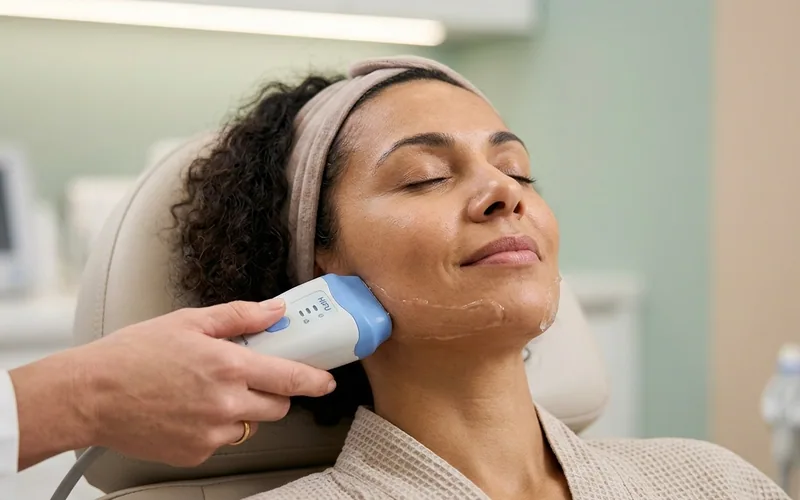
The Short Answer: Yes, With Important Caveats
HIFU (High-Intensity Focused Ultrasound) has a well-established safety record supported by a large and growing body of clinical research. When performed by a trained practitioner using calibrated equipment, adverse events are uncommon and rarely serious.
That said, HIFU is not appropriate for everyone, and the safety profile depends significantly on the quality of the practitioner and the device. This guide covers both.
The Technology: Ultrasound, Not a New Idea
HIFU uses focused ultrasound energy to create controlled heating at a specific depth below the skin surface. The surface itself is not damaged. The heat is delivered to a target layer, typically the SMAS (superficial musculoaponeurotic system), triggering the body to produce new collagen in response.
Ultrasound energy is not new in medicine. It has been used in diagnostic imaging since the 1950s and in physiotherapy and oncology for decades. Aesthetic HIFU applies the same core technology to skin tightening at precisely controlled depths. The difference between a basic 3-depth consumer device and a clinical device such as the 360MAX 22D, which operates at 22 depth settings, is the level of precision and the range of tissue layers that can be targeted.
What the 2025 Research Shows
A 2025 systematic review published in the Aesthetic Surgery Journal, analysing 45 clinical trials of HIFU skin tightening, confirmed two things: it works, and it is generally safe.
The review found significant improvements in skin laxity of 18 to 30% across the studies. On the safety side, adverse events were reported in fewer than 5% of patients, and the overwhelming majority of those were mild and transient, resolving without intervention.
That places HIFU among the better-tolerated non-surgical aesthetic treatments available. Injectable treatments such as dermal fillers carry complication rates reported at considerably higher levels in some studies. Surgical procedures involve significantly greater risk.
What Side Effects Actually Look Like
Common (affecting most clients to some degree):
- Redness in the treated area, lasting a few hours
- Mild swelling, particularly around the jawline and under the eyes
- A warm, tingling or occasionally sharp sensation during treatment
- Mild tenderness to the touch for a day or two
Less common (a small minority of clients):
- Temporary numbness or altered sensation in the treated area, usually resolving within a few weeks
- Mild bruising, more likely in clients taking blood-thinning supplements
- Short-lived surface sensitivity in clients with thinner or more reactive skin
Serious adverse events are rare. Where they do occur, they are generally linked to treatment at the wrong depth for the area, use of poorly calibrated equipment, or treatment of a contraindicated client. Choosing a practitioner with a clear clinical background and a device with proven depth precision significantly reduces this risk.
Contraindications: Who Should Not Have HIFU
A pre-treatment consultation is not optional. The following are contraindications that rule HIFU out:
- Pregnancy
- Active skin infections, including cold sores in the treatment area
- Open wounds or active severe cystic acne in the treatment zone
- Metal implants or plates in or near the treatment area
- Pacemakers or other implanted cardiac devices
- Blood clotting disorders, or blood-thinning medication without medical clearance
- Roaccutane (isotretinoin) use within the previous six months
- Very thin, papery skin with minimal subcutaneous tissue
If you have any existing medical conditions, implants, or ongoing medication, raise them at the consultation. A reputable practitioner will not proceed if there is any clinical reason not to.
Why the Practitioner and Device Matter
HIFU safety is not just about the technology itself. It depends heavily on how the device is used.
A trained practitioner will assess the treatment area properly, select appropriate depth settings for each zone, and adjust energy levels based on the client's skin type and tolerance. Consumer-grade devices with limited depth options increase the risk of energy being delivered at the wrong level.
This is why the question "is HIFU safe?" is partly a question about where you are having it done. See our guide on what HIFU actually does for more on the device differences.
The Consultation Process
Any reputable HIFU provider should conduct a full consultation before treatment. This covers your medical history, current medications, previous treatments, and an assessment of the area to be treated. It establishes whether HIFU is appropriate, what results to expect, and what the treatment plan should include.
At Amina Beauty, consultations are free and carry no obligation to book. Treatments are available in Dunstable, Bedfordshire and at the Kings Cross, London location.
Book a Free HIFU Consultation
Not sure whether HIFU is right for you? Book a free, no-obligation consultation at Amina Beauty. We will assess your skin and give you a clear, honest view of whether treatment is suitable.
Frequently Asked Questions
Is HIFU treatment safe?
Yes. A 2025 systematic review of 45 clinical trials found adverse events in fewer than 5% of patients, with the majority mild and transient. HIFU is based on focused ultrasound technology with a well-established medical track record.
What are the common side effects of HIFU?
Temporary redness, mild swelling and a warm or tingling sensation are the most common, typically resolving within hours to a few days. Temporary numbness affects a small minority of clients and resolves without treatment.
Who should not have HIFU?
Contraindications include pregnancy, active skin infections, metal implants or pacemakers, blood clotting disorders, and Roaccutane use within the previous six months. A pre-treatment consultation is essential to confirm suitability.
Does HIFU use radiation?
No. HIFU uses focused ultrasound energy, the same mechanical wave technology used in diagnostic imaging. There is no ionising radiation.
Is HIFU painful?
Most people describe it as uncomfortable rather than painful. A warm or intermittently sharp sensation is felt during treatment. Settings can be adjusted to the client's tolerance.