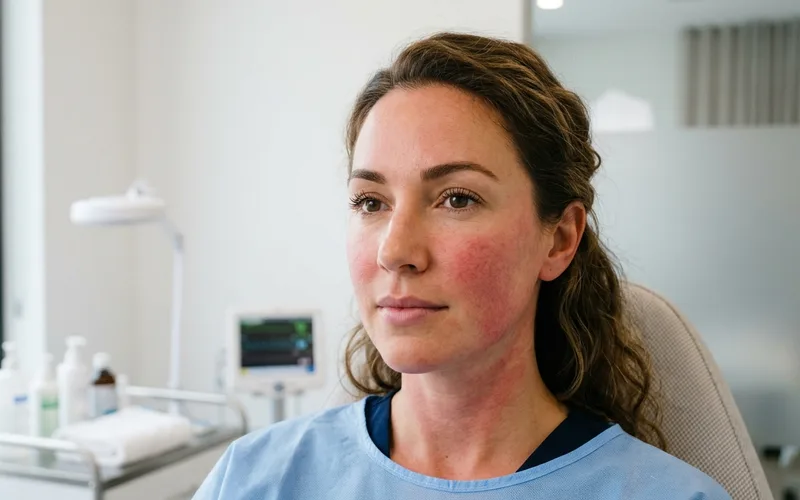
What Side Effects Are Normal After HIFU
HIFU delivers focused ultrasound energy to depths beneath the skin surface, creating controlled thermal zones that trigger collagen production. The body's response to those thermal zones accounts for the side effects most people experience.
The following are considered normal and expected:
Redness. The treated area often appears flushed immediately after treatment, similar in appearance to mild sunburn. This typically fades within 2 to 4 hours in most clients.
Swelling. Mild puffiness in the treated area is common on the day of treatment and occasionally the following morning. It is rarely pronounced enough to be visible to others and resolves within 24 to 48 hours in most cases.
Tenderness to touch. The skin and underlying tissue may feel sensitive when pressed for a few days after treatment. This is not pain at rest but rather a tenderness to pressure.
Tingling or numbness. Some clients report a sensation of numbness, tingling or slight prickling in treated areas, particularly the cheeks and jawline. This typically resolves within one to three weeks and is caused by temporary nerve sensitivity in the treated tissue.
Tightness. A sense of the skin feeling firmer or slightly pulled is common in the days following treatment. This is not discomfort in most cases but a noticeable change in how the skin feels.
What the Clinical Evidence Shows
A 2025 systematic review published in the Aesthetic Surgery Journal, analysing data from 45 clinical trials involving thousands of HIFU patients, reported an adverse event rate of below 5% across all study populations. Of those, the large majority were classified as mild and transient -- meaning they resolved on their own without medical intervention.
The same review confirmed that HIFU produced improvements in skin laxity of 18 to 30% across study populations, making it among the most evidence-supported non-surgical aesthetic treatments available, with a well-documented and reassuring safety profile.
Serious adverse events -- including superficial burns, nerve damage or prolonged swelling -- were rare and in most documented cases were associated with poorly calibrated devices, incorrect depth settings, or treatment of contraindicated clients.
Side Effects by Treatment Area
Side effects vary slightly by the area being treated, because tissue depth, thickness and sensitivity differ across the face and body.
Forehead. Close proximity to bone makes the forehead one of the more sensitive areas during treatment. Post-treatment tenderness and occasional tingling are more common here. Redness and swelling are typically minimal.
Cheeks and mid-face. Usually the most comfortable area. Mild redness and temporary firmness are the most common post-treatment experiences.
Jawline and jowls. The jawline is a high-priority treatment area for most clients and typically responds well with minimal side effects. Occasional bruising is slightly more likely here than on the upper face.
Neck. The neck has thinner skin and can be more sensitive during and after treatment. Temporary numbness or tingling along the neck is more commonly reported than in facial areas. This resolves within a few weeks.
Under-chin (double chin). This area is denser in fat tissue and generally tolerates treatment well. Side effects here are usually mild and short-lived.
Body (arms, abdomen, thighs). Body HIFU is generally less sensitive than facial treatment. Post-treatment tenderness and occasional mild swelling are the most commonly reported responses.
What Is Not Normal
Most post-HIFU responses are mild. The following warrant contact with your practitioner:
- Severe pain lasting more than a few days
- Significant swelling that worsens rather than resolves
- Any skin surface changes such as blistering, scabbing or discolouration that does not clear within 10 days
- Prolonged numbness lasting beyond four to six weeks
- Asymmetry that develops and persists
These outcomes are uncommon with correctly performed HIFU using properly calibrated equipment. They are more associated with untrained practitioners, consumer-grade devices, or incorrect treatment parameters.
How to Minimise Side Effects
A few practical measures reduce the likelihood and severity of post-treatment reactions:
Stay well hydrated. Hydrated skin responds better to treatment and recovers more efficiently. Drink normally in the 24 hours before and after.
Avoid blood thinners for 48 hours before. Aspirin, ibuprofen, fish oil, vitamin E and alcohol can increase bruising risk. Prescription medications should not be stopped without medical advice.
Avoid heat exposure on the day. Hot showers, saunas, steam rooms and exercise that significantly raises body temperature are best avoided for 24 hours post-treatment.
Use a gentle moisturiser. The skin may feel dry or tight in the days following treatment. A fragrance-free, non-irritating moisturiser helps. Avoid active ingredients such as retinol or acids for the first few days.
Avoid direct sun exposure. The treated skin can be more sensitive to UV for a week or two. SPF applied daily is advised.
How HIFU Side Effects Compare to Surgery
For clients weighing HIFU against surgical options, the side effect comparison is significant. Surgical facelift involves a general anaesthetic, 2 to 4 weeks of recovery, risks of infection, haematoma, nerve damage and visible scarring. HIFU involves no anaesthetic, no recovery downtime, and side effects that are almost entirely resolved within a week.
For a full comparison of the two approaches, see HIFU vs Facelift Surgery. For a detailed breakdown of who the treatment is most suitable for, see Is HIFU Right for Me?
Treatments at Amina Beauty
Amina Beauty offers HIFU skin tightening across the face, neck, decolletage and body at both locations: Dunstable, Bedfordshire and Kings Cross, London. A pre-treatment consultation is included with every booking. Prices are published on the treatments page.
Book a Free HIFU Consultation
Discuss your skin concerns and any questions about side effects or suitability at a free, no-obligation consultation with Amina Beauty.
Frequently Asked Questions
What are the common side effects of HIFU?
Redness, mild swelling and tenderness are the most common reactions, typically resolving within 24 to 72 hours. Some clients experience temporary numbness or tingling, which can last a few days to a few weeks. These are all normal responses to the treatment.
How long do HIFU side effects last?
Most resolve within 24 to 72 hours. Numbness or tingling, if it occurs, can last one to four weeks. Bruising, if it occurs, usually clears within 7 to 10 days.
Does HIFU cause bruising?
Bruising is possible but not common. It is more likely in clients taking blood thinners or supplements. When it occurs, it is typically mild and resolves within a week.
Are there serious risks with HIFU?
Serious adverse events are rare. Clinical trial data shows an adverse event rate below 5%, with the majority mild and transient. Risk is significantly reduced by using a qualified practitioner with clinical-grade equipment.
Who is more likely to experience side effects?
Clients with thinner skin, lower pain tolerance or those taking blood-thinning medications. Staying hydrated and avoiding blood thinners for 48 hours before treatment reduces the likelihood of more noticeable reactions.